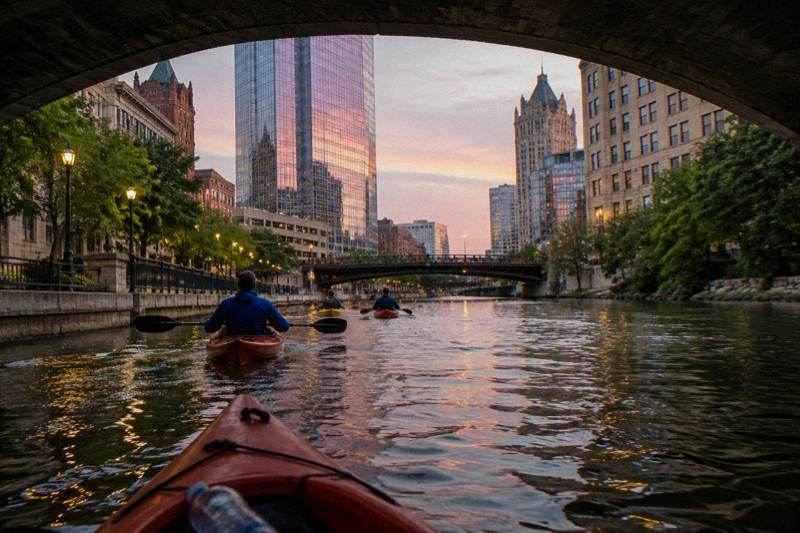
Do The Milwaukee River Bridges Open For Boats?
Yes, the downtown Milwaukee River bascule bridges open for boats. Here is how the federal signal and notice rules work, what paddlers and cruise passengers actually see, and when lifts happen.
When Do The Bridges Lift On The Milwaukee River?
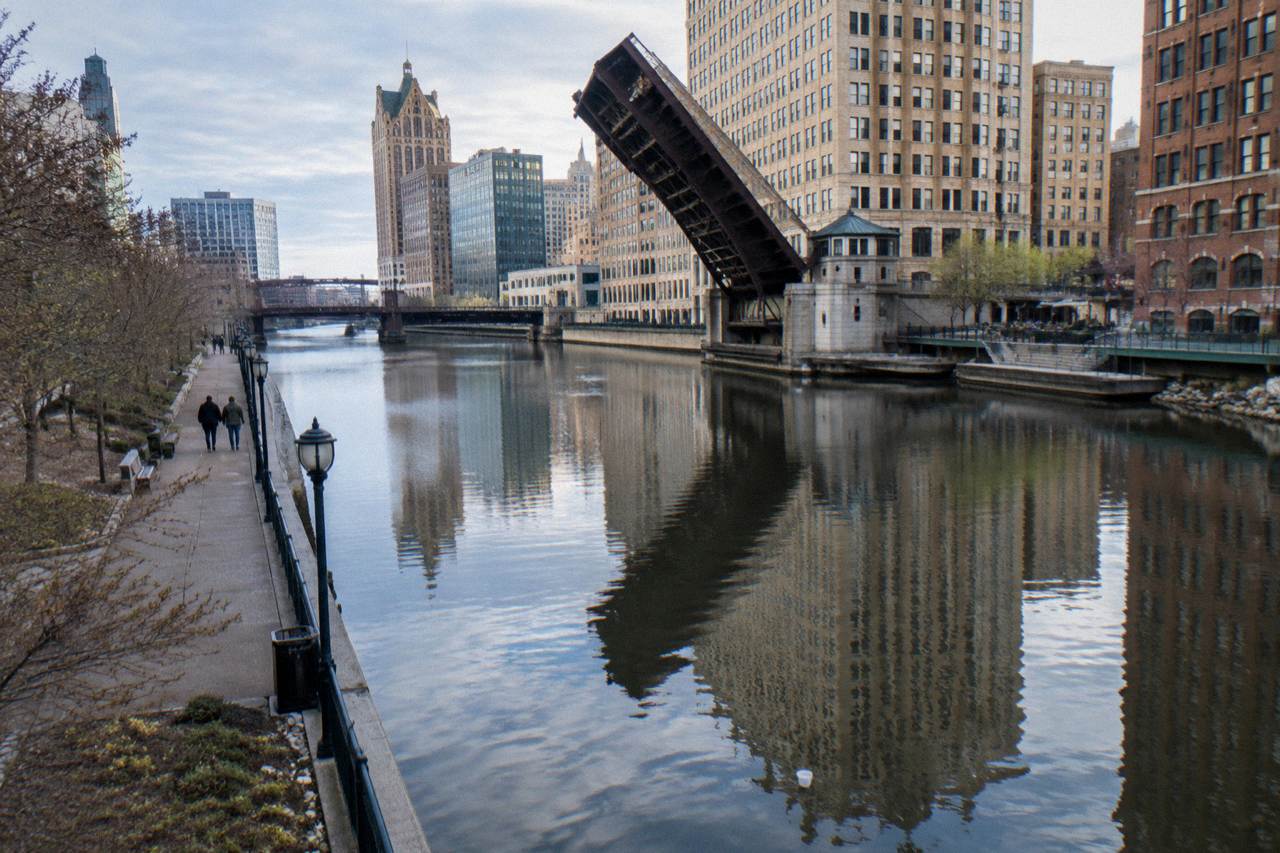
Yes, the Milwaukee River bridges open for boats, and the rule requiring them to do so is federal regulation 33 CFR 117.1093. Under that regulation, the bridges must open for passing vessels whenever an opening is requested, making the river navigable for boat traffic throughout the boating season. The downtown crossings are bascule bridges, meaning the movable spans tilt up on counterweights, some open on signal when a boat sounds its horn, others require two hours of advance notice, and weekday rush hours carry restrictions from April 16 through November 1. Every river trip in downtown Milwaukee, from the guided skyline kayak tour to a private donut boat cruise, passes beneath them, and larger cruise boats depend on the lifts to reach the harbor.
That single regulation is worth understanding before any trip on the river, because it explains nearly everything a first-time visitor notices about how downtown Milwaukee works on the water. The river cuts straight through the middle of the city, and the bridges that carry traffic across it, roughly a dozen of them between the Harbor District and the lakefront, are almost all movable spans of the bascule type. A bascule bridge is a drawbridge in the classic sense: the deck pivots upward around a horizontal axis near one end, with a massive counterweight doing most of the lifting work. When one opens, the two leaves rise into the air like arms and the channel between the bridge piers becomes a clear passage.
Kayakers get the simplest version of the experience. A kayak is small enough to fit under most of these bridges even when they are closed, at least through the fixed center spans where clearance allows, so paddlers on the Milwaukee River kayak rental from Brew City Kayak in the Harbor District generally do not need a lift at all. They glide under the closed deck, look up at the underside of the steel, and keep moving. Larger vessels are the reason the opening rules exist. The narrated cruise boats, private charters and pontoon rentals that share this river have cabins, railings and antennas that cannot duck under anything, so the bridges lift for them.
If you are weighing a paddle against a bigger boat and want the full lift experience from water level, the trio below covers the main angles: a guided small-group paddle, a self-guided rental with time to linger at the bridges, and a private electric boat that cruises alongside the Riverwalk.
The skyline kayak tour, run by Brew City Kayak LLC out of 820 S Water St in the Harbor District, is the most bridge-adjacent product in this site's lineup. It is a small-group paddle capped at 12 people, 1 hour 30 minutes on the water, rated 4.6 from 9 reviews, from $83 per person, and it includes the guide, the paddles, the life jackets and the instruction. Because the group is guided, the route decisions about which bridges to pass under and when are handled by someone who runs the river all season.
Which Milwaukee River Bridges Open On Signal?
Under 33 CFR 117.1093, the North Broadway, North Water and Michigan Street bridges are the Milwaukee River spans that open on signal, meaning they will lift for passing vessel traffic whenever requested, except during weekday rush periods. This seasonal schedule applies from April 16 through November 1, so boaters planning trips outside those dates or peak commute windows can generally count on an on-request opening. Outside those windows, or when two hours of advance notice is given, the other crossings lift as well, which is why scheduled cruise departures cluster so neatly around predictable opening times. The regulation is the controlling document and it is published in full by the Legal Information Institute at Cornell, so nothing here is operator folklore.
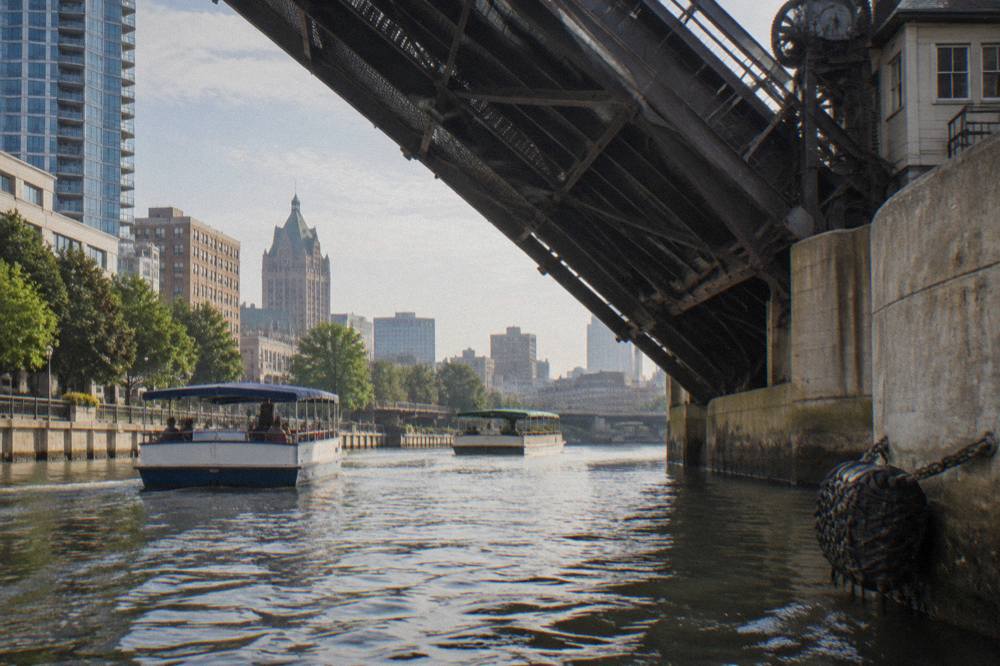
The distinction between "on signal" and "on notice" matters if you are ever operating a boat yourself, and it explains the rhythm of lift traffic downtown. An on-signal bridge responds to the boat itself: the operator sounds one prolonged blast on the horn, the tender acknowledges, and the leaves go up. A bridge on two-hour notice, by contrast, will not open for a spontaneous request; the vessel operator has to have called ahead, which is why the big scheduled cruise departures line up so neatly with the opening windows. A rider on a 90-minute narrated cruise rarely thinks about any of this, because the cruise line has built its schedule around the rule for decades.
For paddlers and small-boat renters the practical takeaway is simpler. The river kayak rental and the tandem kayak rental, both four-hour self-guided products from the same Brew City Kayak dock, do not request openings and do not need to. The rental listing includes the kayak, paddle, PFD and instruction, from $55 for the single and from $89.75 per tandem kayak, and the river between the bridges is open water for a craft that low. What the bridges add for a renter is spectacle: pick a spot near a lift and you can watch the leaves rise while you float.
| Bridge | Opening rule under 33 CFR 117.1093 | What it means for river traffic |
|---|---|---|
| North Broadway | Opens on signal, except weekday rush periods April 16 to Nov 1 | Scheduled cruise boats time departures around it |
| North Water | Opens on signal, except weekday rush periods April 16 to Nov 1 | Horn signal from the vessel triggers the lift |
| Michigan Street | Opens on signal, except weekday rush periods April 16 to Nov 1 | One of the most-watched lifts from the Riverwalk |
| Other Milwaukee River crossings | Generally require 2 hours advance notice | Call-ahead traffic, mostly charters and rentals |
Planning a paddle around the bridge corridor pairs naturally with the trip decisions in how to kayak the Milwaukee River, which covers the same stretch of water from a route-planning angle. And if your question is less about the bridges and more about which product to book at all, the Milwaukee boat tour comparison guide walks through the choices.
How Do Drawbridge Notices And Rush-Hour Rules Work?
A vessel requests an opening with one prolonged blast of its horn at an on-signal bridge, and with a phone call two hours ahead at a notice bridge, while weekday rush periods from April 16 through November 1 restrict on-signal operation so road traffic keeps moving. The full text of 33 CFR 117.1093 from the Legal Information Institute is the source for every one of these limits, and nothing in the rule gives boats unconditional priority over cars at all hours. It is a negotiated balance, which is why lifts cluster at predictable times.
The rush-hour carve-out is the part that surprises people. During the morning and afternoon peaks on weekdays in the operating season, the on-signal bridges do not have to lift, because holding a leaf up through a rush period would gridlock the downtown street grid. Cruise departures are scheduled with this in mind. The Edelweiss historic narrated tours, for instance, run Tuesday through Sunday with adult tickets at $27.00 midweek and $30.50 on weekends, and their timing has long been built around when the bridges can actually open for a cabin cruiser. Milwaukee Boat Line's narrated sightseeing boats, departing from 1124 N Martin Luther King Jr Drive, work the same way. These are other companies' products, booked direct with the operators, and we note them only because their schedules illustrate the rule.
For the products on this site, the notice system is essentially invisible. A kayak does not sound a prolonged blast for anything. The private donut boat cruise from Boat MKE, a 10-passenger electric vessel rented by your group for 1 hour 45 minutes alongside the Riverwalk, is similarly low-profile; the listing describes a cruise alongside the Riverwalk with a cooler, ice and a speaker included, and it is the sort of craft the bridges barely register. The downtown bridges lift for the big boats, and the small electric ones thread through beneath them.
What Do Bridge Lifts Look Like From The Water?
From a kayak or a small boat, a bridge lift looks like two steel leaves rising in counterweighted slow motion, usually within a minute or two, with the gears and counterweight trunnions visible from below, and it is one of the best free shows on the Milwaukee River. The Riverwalk gives the same view from land, 3.1 miles of it on both banks, open around the clock, so you do not need a boat at all to watch a lift. Passengers on narrated cruises hear about this from their guides; paddlers get it at eye level.
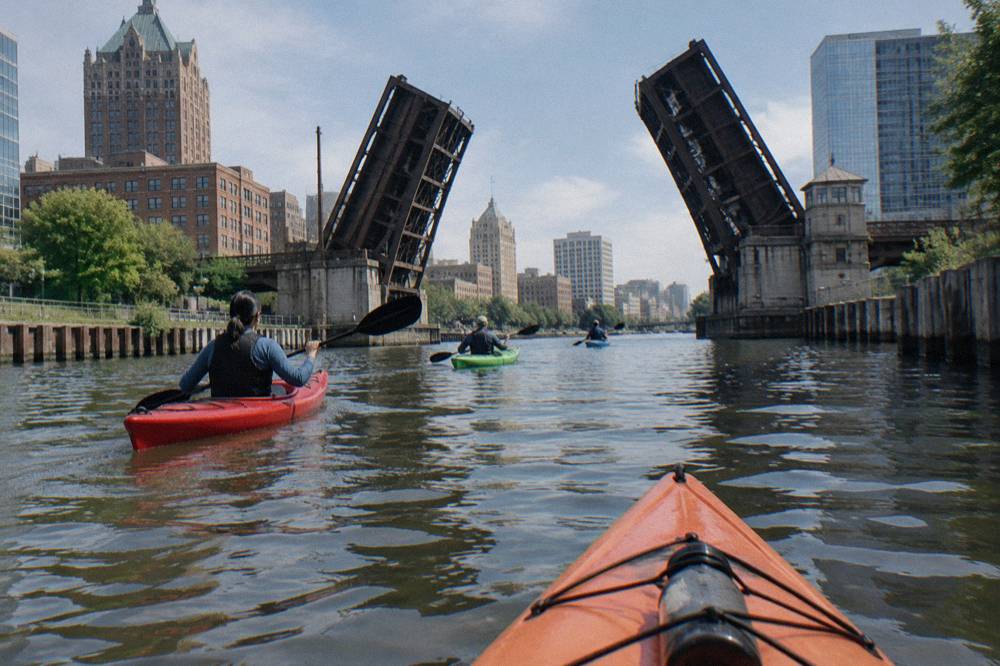
The Historic Milwaukee narrated tours explicitly sell the bridge passage as part of the product: the route runs through downtown on the river and into the inner and outer harbors, passing under bridges with views of the Milwaukee Art Museum, Discovery World and the Summerfest grounds, with volunteer narrators from Historic Milwaukee covering the architecture and the history. That is their cruise, not ours, but the bridges are the shared stage. The City of Milwaukee's own Riverwalk page notes the system runs from the site of the former North Avenue Dam through downtown and the Historic Third Ward to Lake Michigan, a public-private project that began in 1993 and has since added more than 5 miles of walkway along the city's rivers. Other pages covering the same trip are gathered on Milwaukee River Boat Tours.
From water level in a kayak, the details are different from what a cruise passenger sees. You notice the underside of the deck, the barnacled pilings, the way sound carries under the closed span. The skyline kayak tour's route in particular puts a small group right in that corridor with a guide who can point out which bridge is which, and the four-hour river kayak rental gives a self-guided paddler time to wait out a lift and paddle through the open gap behind a cruise boat, which is legal and common but calls for basic caution around the larger vessel's wake. The listing for the rental includes instruction, and the listing does not say anything about bridge etiquette, so ask the operator before booking if you want specifics.
Do You Need To Request A Bridge Opening Yourself?
No, in most cases you do not need to request a bridge opening yourself. When a vessel is large enough to require an opening, crew members or officials typically handle that. Kayaks, tandem kayaks and the dock paddling session generally pass beneath the closed spans without any opening, and the skyline tour is guided by an operator who handles routing. For the electric donut boat, the route depends on the operator's plans, so ask Boat MKE before booking about which bridges its cruise uses. The notice and signal rules in 33 CFR 117.1093 bind the bridge tenders and the operators of larger craft: the pontoons, the cruisers, the chartered boats. Renters of the self-captained 21-foot pontoons from Riverwalk Boat Tours & Rentals, up to 10 passengers including the driver with the operator listing half-day rates of $265 Monday to Thursday, are the kind of customers who deal with bridge scheduling, because a pontoon with a bimini top does not duck under anything.
That is a real dividing line on this river, and it is worth naming plainly. If you want to be the person who sounds the horn and watches the leaves rise for you, you need to be driving something with an air draft, and the products that create that experience on the Milwaukee River are the pontoon rentals and the captained charters, none of which this site sells (see Private Charters). What this site sells is everything that fits under the bridges without asking. The Discovery World dock paddling session, from $18 per person with life jacket, dry bag, floating phone case, sunscreen and a safety orientation included, happens at a lakefront dock where bridges are not part of the picture at all, and it is the calmest option in the lineup for anyone who finds the downtown bridge traffic intimidating.
| Product on this site | Craft type | Needs a bridge opening? | Bridge experience |
|---|---|---|---|
| Skyline Kayak Tour | Guided kayak, max 12 | No | Passes under closed spans with a guide |
| Milwaukee River Kayak Rental | Single kayak, 4 hours | No | Glide beneath decks at your own pace |
| Tandem Kayak Rental | Two-person kayak, 4 hours | No | Same under-deck passage, shared craft |
| Discovery World Dock Paddling | Dock session, lakefront | No | No bridges on the route at all |
| Private Donut Boat Cruise | Electric boat, 10 passengers | No | Low-profile cruising alongside the Riverwalk |
There is a planning bonus in the bridge calendar for anyone renting a kayak for the afternoon. Lifts are most frequent around scheduled cruise departures and least frequent mid-morning, so a renter who times a downtown leg against the cruise schedule can catch two or three lifts in an hour from the water. We compared the listings and the rental window, four hours from the Brew City Kayak dock in the Harbor District, is generous enough that you do not need to plan it that tightly. The rental listing notes that breweries and restaurants line the river, and the Riverwalk landings between bridges make easy rest stops.
What Happens When A Bridge Cannot Open?
When a bridge cannot open, usually because of construction or repairs, the Coast Guard issues a temporary deviation notice that legally suspends its required openings for boaters, as happened with the Cherry Street bridge during a multi-month rehabilitation period that has since ended. The bridge stays locked in place until the work is finished and normal operations resume. When that occurs, river traffic reroutes around the affected crossing rather than through it, the detour is usually short because the river grid offers parallel routes, and no bridge on the downtown corridor is closed to river traffic indefinitely right now. There is no fixed closure to warn readers about in the current season, and there is no reason to expect one before you paddle.
The historical example is instructive more than anything. During the Cherry Street rehabilitation, the bridge did not open for river traffic across a winter window, which mattered almost exclusively to larger vessels, since kayaks continued to pass through wherever clearance allowed. Temporary deviations like that are published by the Coast Guard and reflected in the same body of regulation, 33 CFR 117.1093 and its amendments, which is why anyone operating their own boat on this river should glance at the current text rather than relying on a summary, ours included. Paddlers and rental customers get this information secondhand and harmlessly: the operator's staff at the dock know the current state of the corridor on any given day.
For the guided products, the guide absorbs the problem entirely. The skyline kayak tour caps at 12 paddlers and moves as a group, so a locked bridge simply changes which stretch of river the group uses, and the same flexibility applies to the private donut boat cruise, which the listing describes as cruising alongside the Riverwalk rather than running a fixed route. Neither product's listing promises a specific bridge passage, and neither should be booked on the expectation of one.
When Is Bridge Season On The Milwaukee River?
Bridge season on the Milwaukee River runs roughly May through October, the open-water season, when cruise boats and rentals are running and lift requests are live. The federal rush-hour restriction window itself spans April 16 through November 1, so the two dates you may encounter on signage differ slightly. Outside the season the river quiets down, the listings close, the booking pages for the kayak products show no open dates in October and reload dates for the next season, and the Riverwalk becomes the best way to see the bridges at all. The dock paddling session lists its next date in late June 2027, so check the booking page for dates when the season reopens.
Seasonality on this river is a single story told once: everything on the water runs in the warmer months, and everything off the water, the Riverwalk above all, runs year-round. The Riverwalk's 3.1 miles are open 24 hours a day, 365 days a year, per the City of Milwaukee's Department of City Development page, which makes it the off-season substitute for exactly the views a summer paddle delivers. A winter visitor who wants to see the bascule bridges can walk the Third Ward stretch and look up at the closed leaves, and a visitor in June can book the skyline kayak tour and look up at them from a seat on the water. The Milwaukee boat tour season and schedule guide covers the full calendar picture.
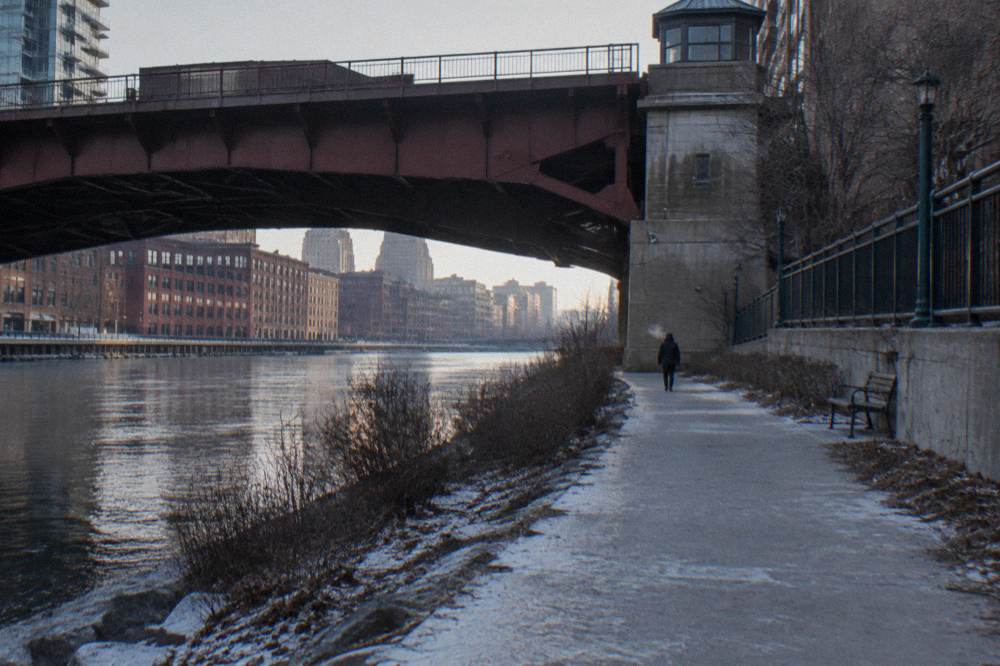
There is also a planning question hidden inside the season: which direction do you want to face when the leaves rise? A cruise passenger faces forward with narration; a kayaker faces the bridge dead-on with a paddle in hand; a Riverwalk walker faces the whole scene at once, boats, bridge and skyline in one frame. The private donut boat, with its 10-passenger round table and its included speaker, turns the same view into a floating picnic. Different vantage points, same machinery, and the machinery is genuinely interesting: these are heavy steel spans that balance on counterweights and open on a schedule set in federal code, every day of the season, for whoever needs to pass.
Between the guided paddle, the four-hour rental and the private electric boat, the three options below are the practical ways this site's readers end up under the bridges.
Common Questions About Milwaukee River Bridge Openings
Do The Milwaukee River Bridges Open For Boats?
Yes. The downtown crossings are bascule drawbridges governed by 33 CFR 117.1093. Several, including the North Broadway, North Water and Michigan Street bridges, open on signal outside weekday rush periods in the April 16 to November 1 window, and others require two hours of advance notice.
Do Kayaks Need The Bridges To Open?
No. Kayaks, tandem kayaks and low electric boats like the private donut boat pass beneath the closed spans where clearance allows, so the skyline kayak tour and the river kayak rentals never request a lift.
How Does A Boat Request An Opening?
At an on-signal bridge the operator sounds one prolonged blast on the horn and the tender raises the leaves. At a notice bridge the operator calls roughly two hours ahead, which is why scheduled cruise departures line up with predictable lift times.
When Can The Bridges refuse To Lift?
During weekday rush periods from April 16 through November 1 the on-signal bridges are not required to open, and a construction deviation can lock a bridge down entirely, as happened temporarily at Cherry Street.
Where Can I Watch A Bridge Lift Without A Boat?
The Milwaukee Riverwalk runs 3.1 miles along both banks and is open 24 hours a day, so the downtown bridge corridor is fully viewable on foot, year-round, including from the Historic Third Ward stretch.