Does It Get Rough On A Lake Michigan Boat Tour?
Waves, wind and harbor protection on Milwaukee boat tours: what gets choppy, what stays calm, and how to pick a protected route if you worry about motion sickness.
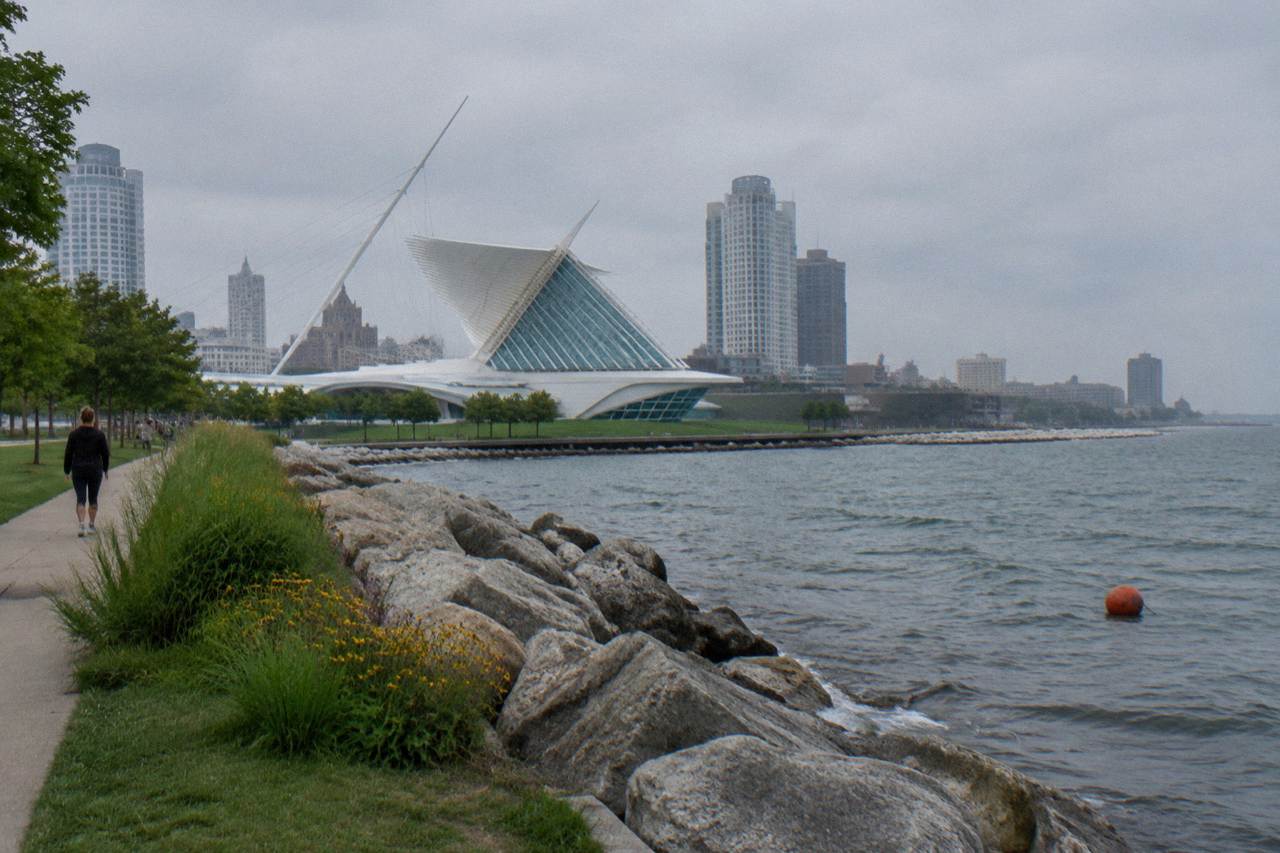
The honest answer about rough water in Milwaukee is that it depends almost entirely on which body of water you are on. The Milwaukee River downtown is narrow, sheltered and essentially flat almost every day of the season. The inner harbor behind the breakwater is usually calm with a light chop at worst. Open Lake Michigan is a different animal: a brisk north or northeast wind can build waves that rock even large vessels, and small craft advisories are a real thing on the Great Lakes in any month. The saving grace is geometry. Almost every commercial tour route from downtown stays inside the breakwater or up the river, so the water most visitors experience is protected water. Rough conditions exist, but you generally have to go looking for them.
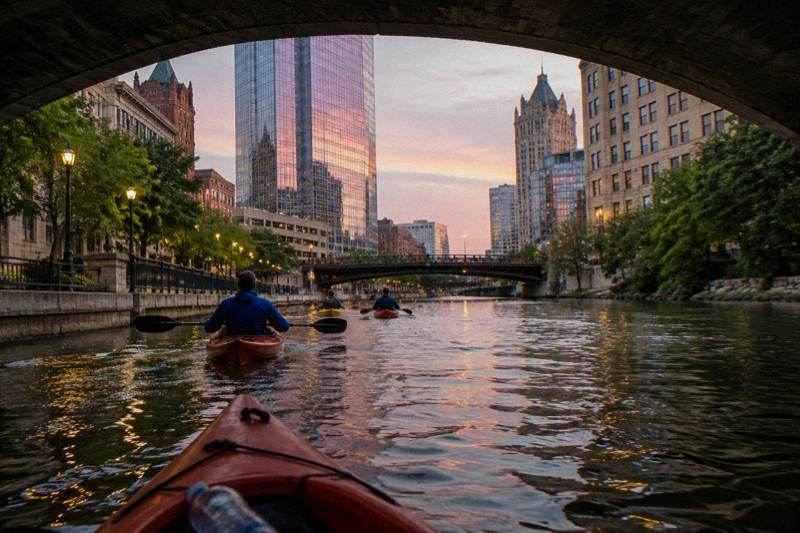
That distinction matters to anyone deciding between products. A reader comparing a narrated harbor cruise against a paddle up the river is really comparing two different water regimes, and this site's own lineup splits the same way. The guided skyline kayak tour, the river kayak rental, the tandem kayak and the private donut boat cruise all operate on the Milwaukee River, which is the calmest water in the city (see What To Wear). The Discovery World dock paddling session sits in the lakefront harbor beside the museum, sheltered by the pier itself. This article walks through wind direction, seasonal patterns, vessel size and route design so you can predict, before you book, whether your trip will feel rough.
How Choppy Is The Lake, Really?
Yes, occasionally, but only on routes that leave the harbor, and rough days are the exception rather than the rule. The sheltered Milwaukee River stays near-flat even when the open lake holds two-foot waves, and rougher conditions mainly show up on open-lake segments past the breakwater, where sustained winds of about 15 knots or more can build genuine wave motion.
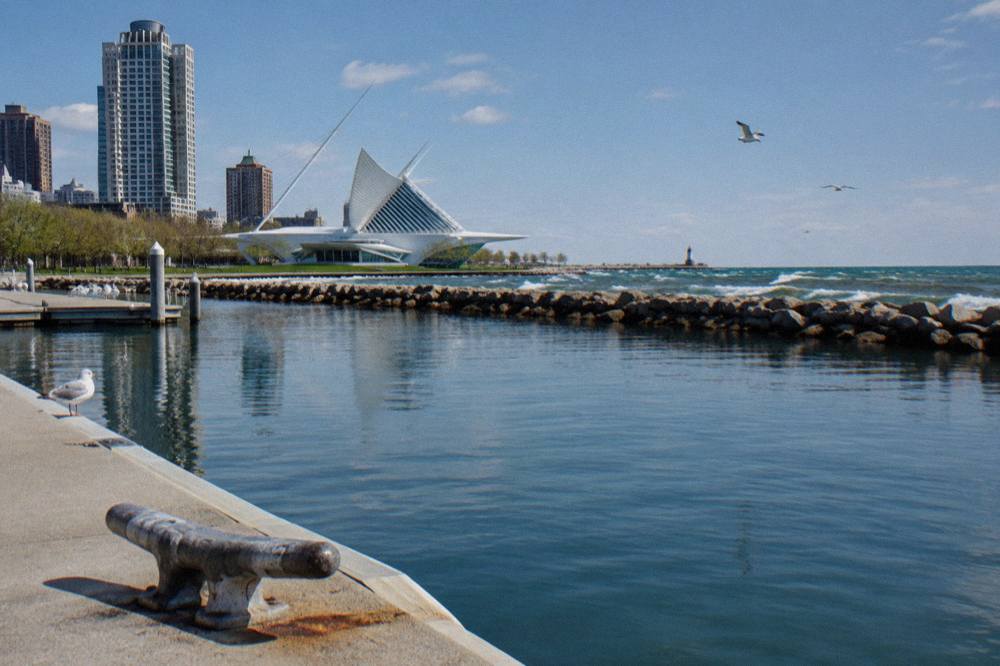
Wind direction is the single biggest predictor. Milwaukee's harbor opens to the east, so an east or northeast wind pushes open-lake water straight toward the entrance and stacks the largest waves where the harbor meets the lake. A west wind, blowing off the land and out over the lake, flattens the near-shore water and often leaves the lake glassy within a mile or two of shore while building seas far offshore. South winds produce a rolling swell that wraps into the harbor mouth. None of this touches the river at all, because downtown's bascule bridges, buildings and banks knock the fetch down to almost nothing.
The vessels matter too. The large narrated cruise boats running from the downtown docks carry 125 to 150 passengers and handle harbor chop without much motion. Smaller craft, kayaks and paddle boards especially, feel every inch of chop there is, which is exactly why the paddling products on this site deliberately sit on sheltered water: the river for the Brew City Kayak products, the dock basin for the Discovery World session. When people ask whether it gets rough, the useful follow-up question is what you will be floating on, not just where.
Which Parts Of The Milwaukee Water System Stay Calm?
The Milwaukee River through downtown, the inner harbor behind the breakwater, and the sheltered dock basins stay calm on nearly every operable day of the season. The downtown river is the calmest stretch of commercial water in the city, narrow and short of fetch, moved mainly by passing boat wakes rather than wind, while the inner harbor usually shows only a light chop even when a fresh east wind appears.
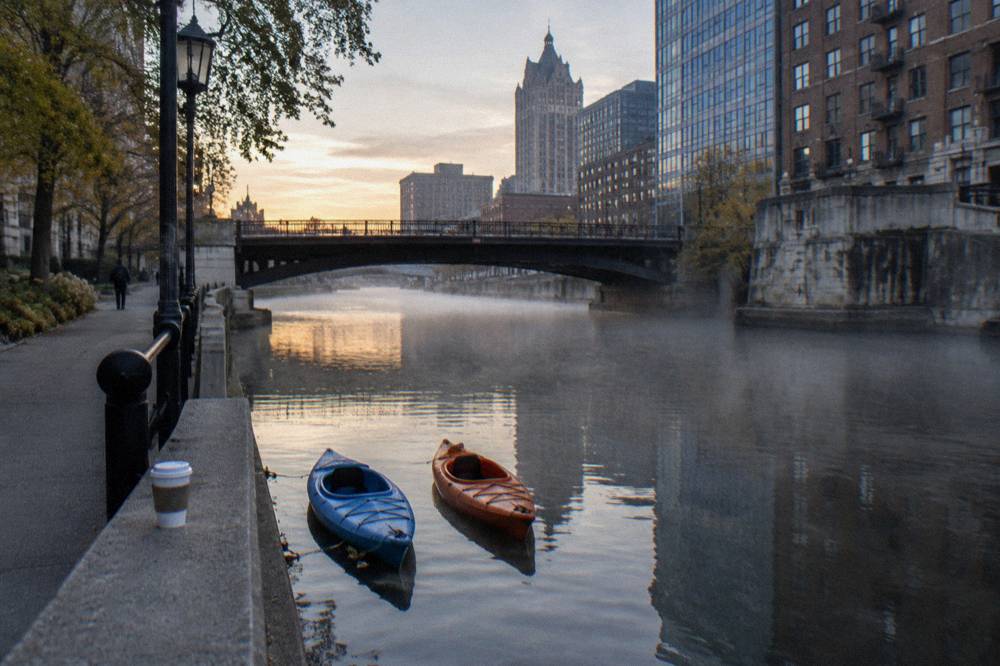
For scale, the Milwaukee Riverwalk System runs 3.1 miles along both banks from the former North Avenue Dam site through downtown and the Historic Third Ward to the lake, and the water beside nearly all of it is the flat, paddlable kind. The City of Milwaukee's Department of City Development documents the system and its public-private construction record on its official Riverwalk project page. That same sheltered corridor is where the river kayak rental, from $55 for the four-hour rental, and the tandem kayak rental, from $89.75 per tandem kayak, operate, meeting at Brew City Kayak in the Harbor District at 820 S Water St. The listing for the rental describes breweries and restaurants lining the banks, which tells you the character of the water: a working urban river moving at walking pace.
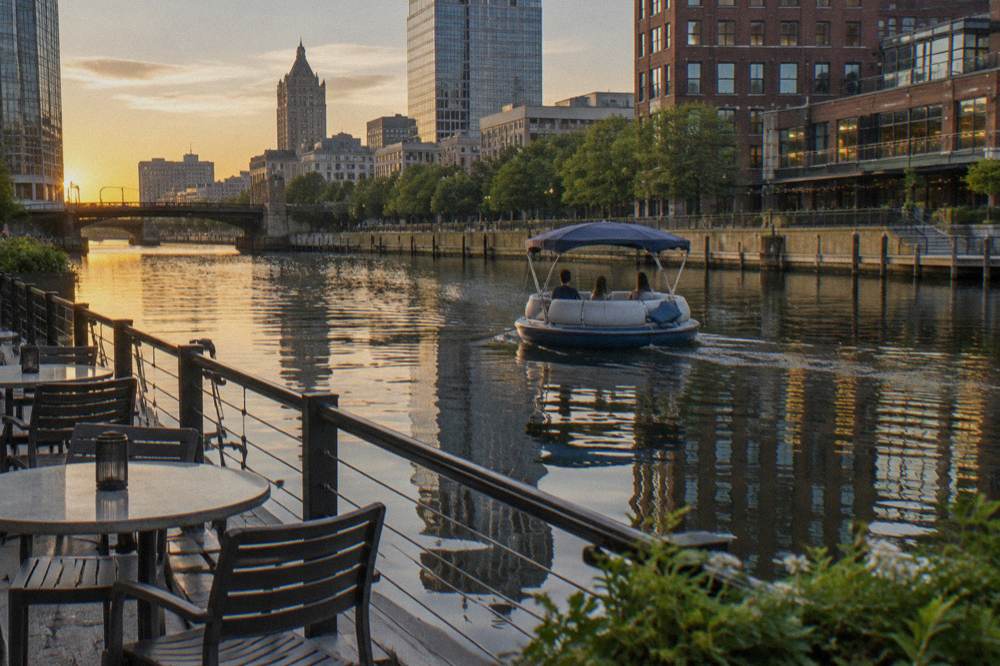
The guided skyline kayak tour uses the same river, from the same meeting point, as a small-group paddle capped at 12 people with a guide and instruction included, from $83 per person for 90 minutes. The private donut boat cruise, a 10-passenger electric boat rented by your group for 1 hour 45 minutes, cruises alongside the Riverwalk on the same flat water. None of these products expose you to open-lake conditions, so if the question behind the question is "will I feel queasy," the river answer is almost certainly no.
| Water area | Exposure | Typical surface | Products that use it |
|---|---|---|---|
| Milwaukee River, downtown | Sheltered by banks and bridges | Near-flat, occasional boat wakes | Skyline kayak tour, river and tandem rentals, donut boat |
| Inner harbor, behind breakwater | Partially exposed at harbor mouth | Calm to light chop in fresh east wind | Narrated cruises, brat and happy hour cruise routes |
| Discovery World dock basin | Enclosed by piers | Pond-calm | Dock paddling session |
| Open Lake Michigan, outside breakwater | Fully exposed | Flat to several feet depending on wind | Only on cruise routes that run outside, captain's call |
When Is The Lake Roughest Around Milwaukee?
Lake Michigan near Milwaukee is roughest in late fall and early spring, when cold water feeds strong pressure gradients and stiff northeast winds; in summer, rough conditions instead cluster around passing fronts and afternoon southwest winds. Water temperatures run roughly 44 to 54 degrees in May, 67 to 76 in July, and 56 to 61 by mid-October, so shoulder-season trips are statistically more likely to meet a raw blow, while mornings offer the calmest window.
Summer has its own signature. From June through August, southwest winds build through the morning and peak in the afternoon, and the lake near shore can go from mirror-calm at 8 a.m. to a short, steep one-to-two-foot chop by 3 p.m. These afternoon waves are the ones that surprise people on small craft, because the morning looked perfect. The countermove is scheduling: a morning river kayak rental or an early skyline tour gets you the day's calmest air as well as its calmest water. The dock paddling session at Discovery World, one hour from $18 per person, is largely indifferent to the afternoon chop because the basin does not fetch up in the first place.
The operators that run onto the open lake handle rough days with route changes and cancellations. Edelweiss states plainly that it does not cancel for rain or thunderstorms, only for severe weather under Coast Guard advisories and the captain's judgment, and that the captain may alter routes for weather and safety, as its operator FAQ page explains. Milwaukee Boat Line's policy, on its policies page, is similar: cruises run in rain, and the captain cancels for unsafe conditions with a refund or reschedule offered. In other words, if the lake is genuinely rough, the big-boat decision is made for you before you board.
Do Rough Waves Cause Seasickness On Milwaukee Tours?
Yes, rough waves can cause seasickness on Milwaukee tours, but only on open-lake segments when wind builds a true swell across Lake Michigan; the river stays flat with short, low ripples that rarely bother anyone, and tours inside the breakwater avoid the exposure entirely, so motion sickness is uncommon outside open water.
A few practical habits do the rest. Eat something before you go rather than paddling or cruising on an empty stomach, keep your eyes on the horizon or the shoreline rather than down at a phone, and hydrate. Ginger and over-the-counter motion remedies work for many people if taken ahead of time. On the river products, none of this is usually necessary, and the guide-and-instruction format of the small-group skyline tour means a first-time paddler has someone watching the group's comfort the whole way. The listing includes life jackets and instruction for every Brew City Kayak product, which addresses the safety question even when the comfort one answers itself.
It is worth being honest about who should hesitate. Nobody should call any paddle trip risk-free, and open-lake kayaking in a blow is a genuinely bad idea for anyone without experience and proper gear. But the products in this lineup were not built for open water. They were built for the flat, protected corridor the city runs through, and that design choice, more than any weather forecast, is what keeps rough water off most visitors' itineraries. The solo dock paddling session even includes a dry bag or floating phone case, sunscreen and a safety orientation, per the listing.
How Do Bridge Openings And Boat Traffic Affect The Water?
Bridge openings do not stir the water at all, and routine boat traffic produces only passing wakes, so downtown's movable bridges are a non-event for anyone worried about roughness. The mechanics of a bascule leaf rising are vertical and slow, with nothing entering the water, while boat wakes arrive as a gentle lift and settle that reaches the banks and passes within seconds, a moment of attentiveness for paddlers rather than a difficulty.
The bascule bridges over the Milwaukee River operate under a federal regulation, 33 CFR 117.1093, which governs when and how they open for vessels; several of the downtown bridges open on signal except during weekday rush periods between April 16 and November 1, with advance notice otherwise. The river carries tour boats, rental pontoons and private craft in season, and each passing hull leaves a wake behind it. In a kayak this is handled by meeting the wake head-on or at an angle, one of the basics a guide covers with a first-time group. The Milwaukee River's current is modest in the downtown reach, and the listing-level safety kit, life jackets and instruction, covers the standard worries. For readers wanting the rulebook side of boating downtown, including the drawbridge schedule and what governs right of way, our article on the rules for boating on the Milwaukee River covers it in full.
Seasonal event traffic deserves one note. During the big lakefront festival weekends in early summer, and around the Fourth of July fireworks, harbor traffic thickens considerably, and the wake frequency on the river and in the harbor goes up with it. The water does not get rougher in the wave sense, but the motion budget does. Paddlers who want stillness should book weekday mornings in those weeks, when the festival grounds are quiet and the river is close to empty.
What Should You Book If You Want The Calmest Possible Water?
Book the Discovery World dock paddling session for the calmest flat water with a lake view, or a river kayak rental for calm water with a city view, since both are built around protected water and neither depends on open-lake conditions, giving you smooth paddling even when the lake itself is choppy.
The dock session carries a 5.0 rating from 5 reviews on its listing, and it is a summer product, so check the booking page for dates when the season reopens. The Milwaukee River kayak rental, 4 hours from $55, is the most reviewed product in this lineup at 4.9 across 32 reviews, and it lets you set your own pace past the breweries and restaurants the listing says line the banks. The tandem version runs the same water at 4.9 from 10 reviews, from $89.75 per tandem kayak. Food and drinks are not included in either rental; alcoholic drinks are excluded and available to purchase.
For groups who want to sit rather than paddle, the private donut boat cruise is the river option: a 10-passenger electric donut boat rented by your group for 1 hour 45 minutes, cruising alongside the Riverwalk from the Boat MKE docks at the end of Mason Street, with a cooler, ice and a speaker included. The small-group skyline kayak tour, from $83 per person for 90 minutes with a guide and instruction, adds a leader to the same corridor and the same flat water. Weather cancellation on any of these gives a new date or a full refund.
| Product | Water | Calm rating | Price basis | Review standing |
|---|---|---|---|---|
| Discovery World dock paddling | Enclosed harbor basin | Calmest in the lineup | From $18 per person, 1 hour | 5.0 from 5 reviews |
| Skyline kayak tour | Milwaukee River | Flat, guided | From $83 per person, 90 minutes | 4.6 from 9 reviews |
| River kayak rental | Milwaukee River | Flat, self-guided | From $55, 4 hours | 4.9 from 32 reviews |
| Tandem kayak rental | Milwaukee River | Flat, two-person | From $89.75 per tandem kayak, 4 hours | 4.9 from 10 reviews |
| Private donut boat cruise | Milwaukee River | Flat, private | See live price | 5.0 from 19 reviews |
Readers weighing price against the big-boat cruise experience can pair this with our guide to Milwaukee boat tour prices, which lays the operator pricing alongside the paddle products. For the broader question of which tour type fits your group at all, the homepage comparison on Milwaukee River Boat Tours is the fastest triage.
Does A Small Craft Advisory Cancel Milwaukee Tours?
No, a small craft advisory does not automatically cancel Milwaukee tours. Open-lake portions get pulled from routes or small-craft products are dropped outright, while river and inner-harbor trips often run as scheduled, with captains making the final call in consultation with operators and the marine forecast, and refunds or rescheduling following any cancellation.
That policy symmetry is worth noticing, because it removes the main anxiety from booking ahead. Every listing in this lineup states free cancellation up to 24 hours before start, and weather cancellation by the operator produces a rebook or a refund, not a lost ticket. So the sequencing that makes sense is: pick the water regime first (river, basin or harbor), pick the craft second, and treat the forecast as a schedule input rather than a gamble. Morning slots in summer, any slot in the shoulder months on the river, and the dock basin almost regardless of wind.
One closing frame for the motion-sensitive reader. The question "does it get rough" usually means "will I regret this," and on the Milwaukee River the honest reporting answer is that the water simply does not do rough. The waves live out past the breakwater, on the big open lake, on the windy fraction of days, on routes the sheltered products never touch. Choose accordingly and the worst motion you are likely to meet is the wake off a passing pontoon, rocking the boat for three seconds while the skyline holds still.
Common Questions About Rough Water On Milwaukee Boat Tours
Does It Get Rough On A Lake Michigan Boat Tour?
It can on routes that leave the harbor in fresh wind, but the river, the inner harbor and the Discovery World dock basin stay calm on nearly every operable day, and every product in this lineup runs on that protected water.
Which Milwaukee water is calmest for a first-time paddler?
The Discovery World dock basin is the calmest, enclosed by piers on the lakefront. The downtown Milwaukee River is a close second, flat with only passing boat wakes, and it is where the kayak rentals, the skyline tour and the donut boat all operate.
What wind is most likely to make the harbor choppy?
An east or northeast wind pushes open-lake waves toward the harbor mouth and stacks the largest seas right where the harbor meets the lake. A west wind flattens the near-shore water. The river is largely indifferent to wind direction.
Do Milwaukee cruises cancel when the lake is rough?
The downtown cruise operators run in rain and cancel only for severe weather under Coast Guard advisories, at the captain's decision, with a refund or reschedule offered. Captains may also alter routes to stay inside protected water.
Will I get seasick on a river kayak tour?
Unlikely. Motion sickness is associated with the open lake's wind-driven swell, not the river's short, low ripples. Going in the morning, eating beforehand and keeping your eyes on the shoreline cover nearly every other case.
What is the best time of day to avoid waves around Milwaukee?
Early morning. In summer, southwest winds build through the day and often put a short chop on the near-shore lake by mid-afternoon, while the 8 a.m. water is close to glass. The river and the dock basin stay calm at any hour.