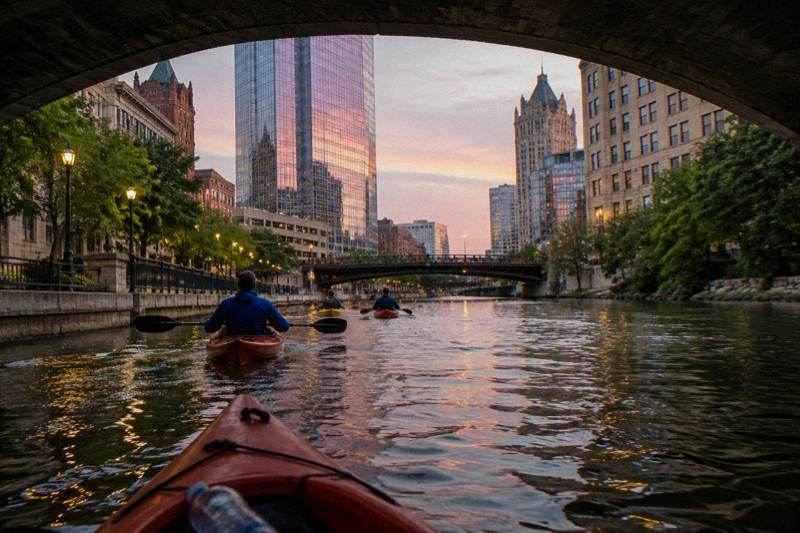
Milwaukee Riverwalk: Map, Highlights, And Where The Boats Run
The Milwaukee Riverwalk runs 3.1 miles along both banks of the Milwaukee River, from the former North Avenue Dam site through downtown and the Historic Third Ward to Lake Michigan, and it is open 24 hours a day. Here is how the route splits into sections, what you pass, and where the boats and kayaks actually depart.
Short answer
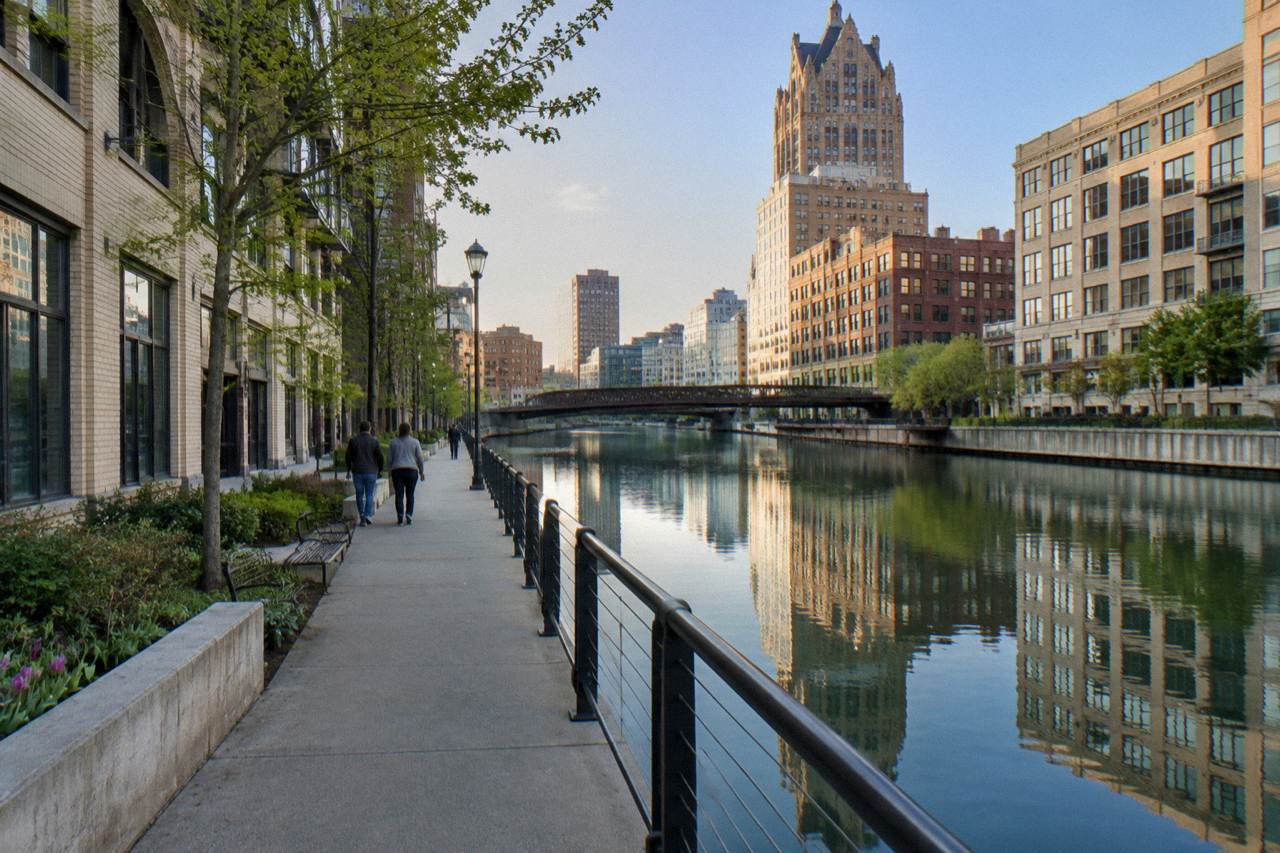
The Milwaukee Riverwalk is a 3.1-mile public walkway on both banks of the Milwaukee River, open 24 hours a day, built through a public-private partnership that began in 1993. It links downtown, the Historic Third Ward and the lakefront, and passes the docks where kayak tours, rentals and cruise boats depart between May and October.
The Milwaukee Riverwalk is 3.1 miles of public walkway running along both banks of the Milwaukee River, from the site of the former North Avenue Dam through downtown and the Historic Third Ward to Lake Michigan. The City of Milwaukee's Department of City Development describes it as a public-private partnership that began in 1993, and the city notes that more than 5 miles of riverwalk have been built along the city's rivers since then through cost sharing with private developers. It never closes: the Riverwalk is open to the public 24 hours a day, 365 days a year.
That last detail matters more than it sounds. Milwaukee's boating season runs roughly May to October, and once the boats come out of the water the Riverwalk keeps working as the city's best walking corridor. In summer it doubles as the shoreline of a working urban river, the place where the Brew City Kayak rentals, the guided skyline kayak tour and the private donut boat cruise all operate within sight of the path. This guide covers the route itself, the art and landmarks along it, the docks where tours leave, and how to fold a paddle or a cruise into a walk you were already taking.
Where Does The Milwaukee Riverwalk Start And End?
The Riverwalk runs 3.1 miles along both banks of the Milwaukee River, beginning near the site of the former North Avenue Dam and ending at Lake Michigan in the Historic Third Ward. It is a single connected system, but it behaves like three distinct neighborhoods: the quiet northern stretch, the bridge-heavy downtown corridor, and the wide boardwalk of the Third Ward.
The system's origin story explains its shape. Milwaukee began planning the Riverwalk in the late 1980s and early 1990s as a reinvestment strategy for a river that had been treated as an industrial backwater, and the city formalized the public-private partnership in 1993. Developers who build riverfront property contribute walkway segments that connect to the public system, which is why the character changes so sharply from block to block. North of downtown you pass under old brick warehouses; downtown the path threads between restaurant patios and bridge abutments; in the Third Ward it opens into a wide timber boardwalk lined with benches facing the water.
Because it sits on both banks, the Riverwalk is really two parallel experiences joined by whatever bridge is nearest. The city's Department of City Development page on the Riverwalk is the clearest official source on the extent and the partnership model. For a sense of what the corridor feels like at water level rather than from the path, the kayak route on the Milwaukee River covers the same geography from a paddle's point of view.
Practical note: there is no single "start" kiosk or gate. Most visitors enter wherever they parked, and the three most useful entry clusters are the North Avenue bridge area at the top, Pere Marquette Park in the middle, and the Milwaukee Public Market block in the Third Ward at the bottom.
What Are The Best Sections Of The Riverwalk To Walk?
Downtown's bridge-to-bridge stretch between Pere Marquette Park and the Milwaukee Public Market delivers the densest mix of views, patios and boat traffic, and it is the section most first-time visitors should pick. The Third Ward boardwalk is the most photogenic. The northern stretch near the former North Avenue Dam is the quietest and best for a morning walk. Each section rewards a different pace.
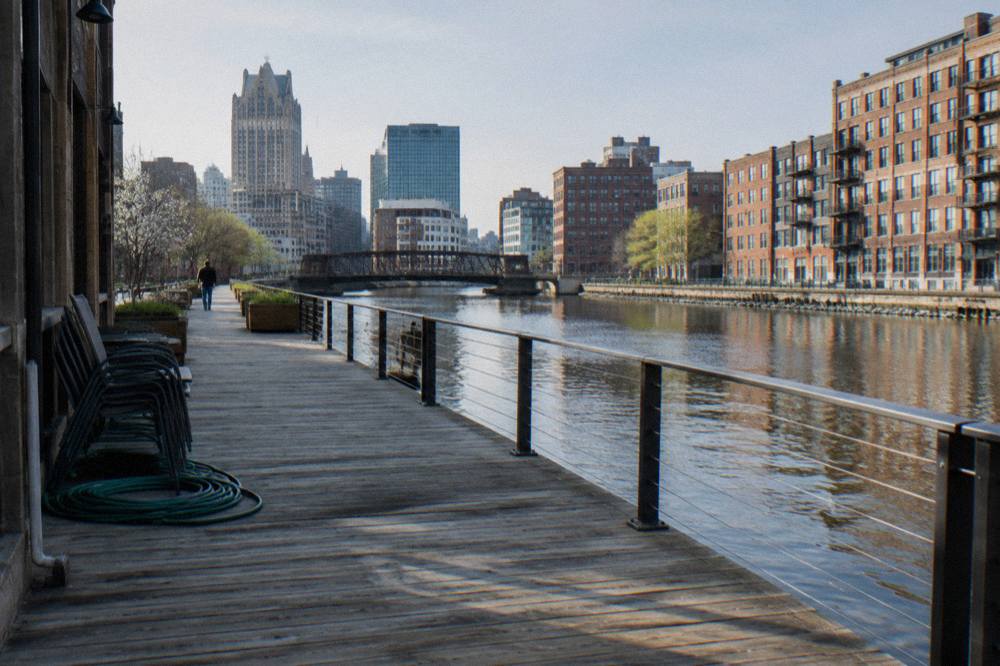
Pere Marquette Park, at State Street and Dr. Martin Luther King Jr. Drive, is the natural hinge of the whole system. It is where Riverwalk Boat Tours & Rentals docks its self-captained pontoon fleet, and the green space around the dock makes it one of the few places on the route where you can sit on grass rather than concrete. Heading south from the park you cross into the downtown stretch almost immediately: the river narrows, bascule bridges stack up one after another, and on a summer Saturday the channel between them fills with kayaks, electric donut boats and the occasional cruise vessel pushing toward the harbor.
| Section | Character | Best for | Nearest dock activity |
|---|---|---|---|
| North Avenue Dam area (north) | Quiet, green banks, light traffic | Morning walks, locals' stretch | Upstream paddling on the rental window |
| Downtown bridges (middle) | Patios, public art, bridge lifts | First-time visitors, boat watching | Narrated cruises from the Highland Ave and MLK Dr docks |
| Historic Third Ward (south) | Wide timber boardwalk, warehouses | Photography, dining, market stops | Pontoon rentals at Pere Marquette Park |
The Third Ward section, south of the Buffalo Street bridge, is where the Riverwalk earns its postcard reputation. The boardwalk widens, restaurant patios stack along the east bank, and the block around the Milwaukee Public Market puts food within a two-minute walk of the water. Our Historic Third Ward neighborhood guide covers the district in detail, including how the neighborhood's architecture pairs with a riverfront walk.
The northern section, up toward the former North Avenue Dam site, is the locals' stretch. Boat traffic thins out, the banks soften, and the walk becomes more about the river itself than the buildings around it. If you are planning a full day that combines walking with time on the water, the itinerary in one day in Milwaukee with a boat tour slots a riverfront walk against a morning or afternoon paddle.
The three walkable products that follow the river itself are the guided skyline kayak tour from the Harbor District, the four-hour river kayak rental, and the private donut boat cruise alongside the Riverwalk; together they cover guided, self-guided and private-boat ways to see the same corridor from below the path instead of above it.
A walk and a paddle are not interchangeable, though. The Riverwalk shows you the architecture at eye level from land; the river shows you the architecture from below, with the bridges overhead and the buildings reflected around you. Most people who do both start with the walk to learn the geography, then book the water time for the angle.
Where Do Boat Tours And Kayak Rentals Depart Along The Riverwalk?
The downtown docks cluster into four groups: Brew City Kayak at 820 S Water Street in the Harbor District for kayak tours and rentals, Boat MKE at the end of Mason Street for the private donut boat, Riverwalk Boat Tours at Pere Marquette Park for pontoons, and the cruise operators at 205 W Highland Ave and 1124 N MLK Drive for narrated and dinner cruises. Every one of them sits within a short walk of a Riverwalk segment.
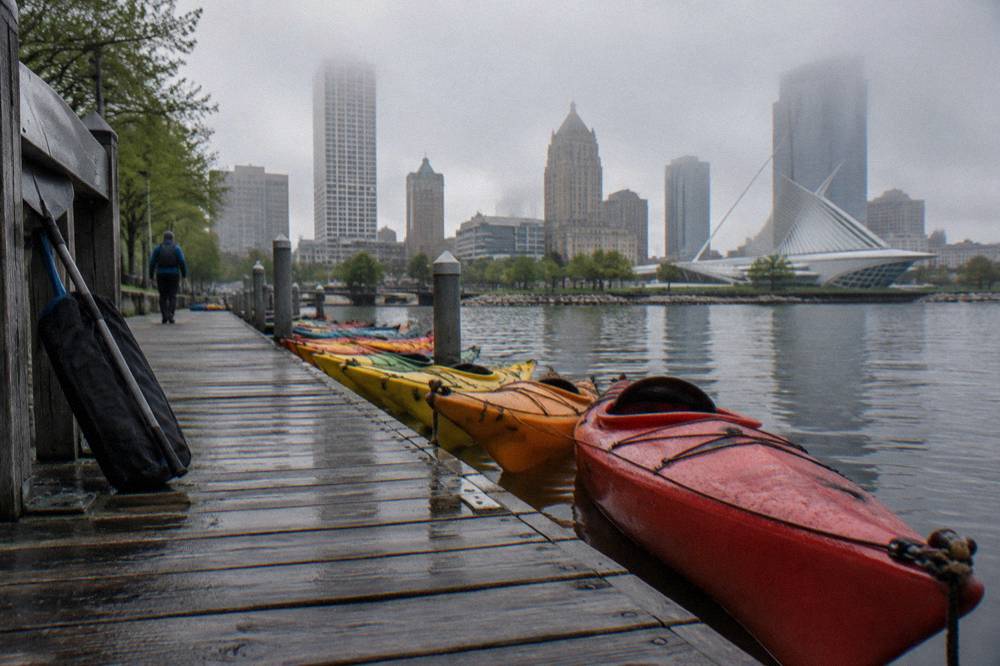
The paddling operation closest to the southern Riverwalk is Brew City Kayak LLC in the Harbor District. Its guided skyline kayak tour runs an hour and a half in groups capped at 12, from $83 per person, with a 4.6 rating across 9 reviews; the listing includes paddles, life jackets, guide and instruction, and free cancellation up to 24 hours before the start. The same dock handles the four-hour river kayak rental, from $55 for the rental, and the tandem version at from $89.75 per tandem kayak. The rental listing notes that breweries and restaurants line the river, which is the corridor's whole appeal in one sentence.
North of downtown, Boat MKE docks at the end of Mason Street and runs the private donut boat cruise, a 10-passenger electric donut boat rented by your group for 1 hour 45 minutes alongside the Riverwalk, with a cooler, ice and a speaker included. And on the lakefront end, Forward Outdoor runs a dock paddling session at Discovery World, 500 N Harbor Dr, a one-hour session from $18 per person that includes a life jacket, dry bag or floating phone case, sunscreen and a safety orientation.
The cruise operators book direct and are not part of this site's catalog, but they use the same river. Edelweiss Cruises docks at 205 W Highland Ave and runs narrated historic tours with Historic Milwaukee volunteer narrators, plus brat, dinner and themed cruises from May through October. Milwaukee Boat Line departs from 1124 N MLK Jr Drive with 90-minute narrated sightseeing tours of the rivers, harbors and lake. Riverwalk Boat Tours' pontoon rentals dock right in Pere Marquette Park, with the operator listing half-day rentals at $265 weekdays and $295 Friday through Sunday.
If you want the water-level version of what the walk shows you, the river kayak rental is the most flexible option: four hours, self-guided, launched from the same Harbor District dock.
For pairs, the tandem version of the same rental covers the same stretch of river with one boat instead of two, at from $89.75 per tandem kayak, also with a 4.9 rating, from 10 reviews on its listing.
Parking around these docks is covered in detail in downtown Milwaukee boat tour parking, but the Riverwalk-specific answer is simple: because the path connects all the docks, you can park once near any of them and walk to the others in minutes.
What Public Art And Landmarks Will You Pass On The Riverwalk?
The Riverwalk's signature art is its bronze statue set, most famously the Fonz on the downtown stretch, alongside rotating installations and a long list of architectural landmarks: the Marcus Center, the Allen Bradley clock tower's silhouette to the south, the Third Ward's restored warehouses, and, at the lakefront end, Discovery World and the Milwaukee Art Museum's Calatrava wings. Public art and bridge architecture do most of the visual work between them.
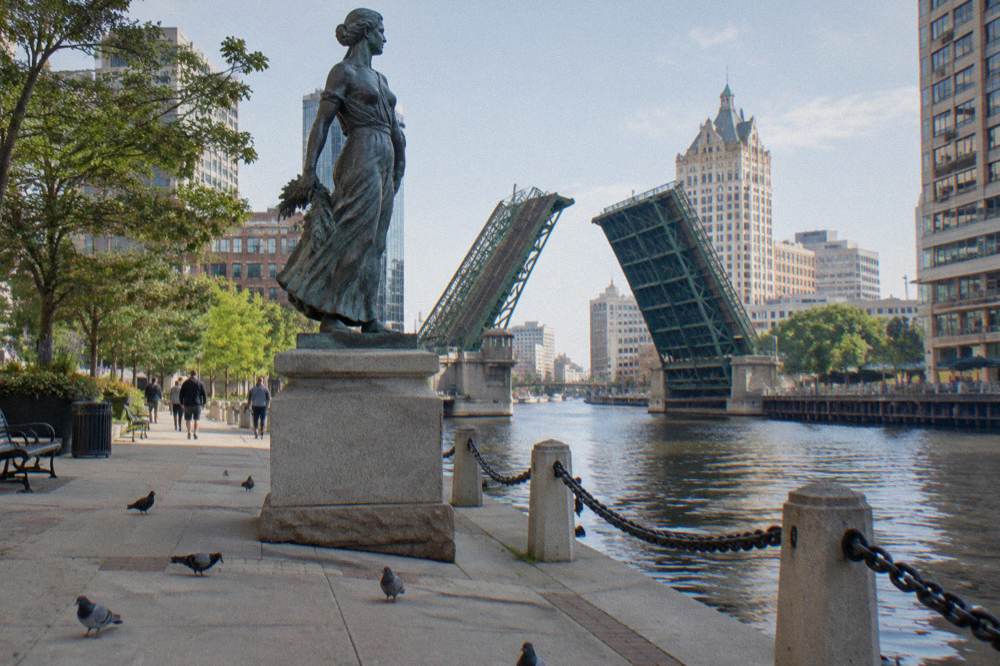
The bronze Fonz statue, installed near the Wells Street bridge as a fond callback to the television show that put Milwaukee's name in living rooms worldwide, is the one piece of Riverwalk art most visitors can name before they arrive. Around it, the Riverwalk District's three miles carry rotating public art and installations, and Visit Milwaukee describes the district as linking downtown neighborhoods through public art, dining and entertainment. The art changes; the Fonz stays.
The architecture is the permanent collection. Downtown, the walk passes under and beside the bascule bridges that give the river its rhythm, with the Marcus Center grounds and restaurant patios above the east bank. South of downtown, the Historic Third Ward's converted warehouse district lines both sides. At the mouth of the river the skyline opens onto the lakefront: the Milwaukee Art Museum's Quadracci Pavilion, the Calatrava-designed wings that have become the city's single most photographed structure, and Discovery World at Pier Wisconsin, whose dock hosts the summer paddling sessions described above. Edelweiss's narrated tours, which pass the Art Museum, Discovery World and the Summerfest grounds on their way through the inner and outer harbors, cover nearly the same inventory of landmarks from the water.

One piece of new public space belongs on the map too: the Gary P. Grunau Memorial Plaza opened at West Highland Avenue and North Dr. Martin Luther King Jr. Drive, improving the east-west connection at the point where the cruise docks meet the Riverwalk. It is a small plaza with an outsized effect on how the downtown section flows.
For travelers building a day around the corridor rather than a single walk, things to do on the water in Milwaukee pairs the riverside landmarks with the boats that pass them.
For a two-person version of the same river sightseeing, the tandem kayak rental puts a pair on the water for the full four-hour window.
How Do The River Bridges Work When Boats Pass?
The downtown Milwaukee River bridges are bascule drawbridges governed by a federal regulation, 33 CFR 117.1093, which sets their opening schedules: several major bridges open on signal except during weekday rush periods between April 16 and November 1, while many others require two hours of advance notice. Kayaks and small boats generally pass under without any opening at all. On the Riverwalk, a bridge raising for a boat is a regular summer event worth stopping to watch.
The rule matters to walkers because bridge lifts are one of the free shows on the Riverwalk. When a cruise boat with a fixed superstructure heads upriver, the bridge tenders swing the leaves, traffic pauses, and the whole street section briefly becomes a moving piece of industrial machinery. The Cornell compilation of 33 CFR 117.1093 spells out which bridges open on signal and which need advance notice; the short version for a visitor is that lifts happen on demand in the boating season, not on a fixed timetable.
For paddlers the bridges are mostly scenery rather than procedure. A kayak sits low enough to clear under the downtown bascules in their closed positions, which is why the guided skyline tour and the rentals thread the downtown stretch without waiting on any bridge. The bridges question has its own full write-up in do the Milwaukee River bridges open for boats, including what changes in the off-season.
The federal rule's rush-hour carve-out is the detail most guides miss: on weekday mornings and late afternoons in the boating season, the big bridges stay down, so the dramatic lifts cluster at midday, evenings and weekends, exactly when Riverwalk foot traffic peaks. Time a downtown walk for a Saturday afternoon and you will likely see at least one.
When Is The Best Season To Walk The Riverwalk Or Paddle It?
The Riverwalk itself runs all year, but the water alongside it does not: paddling products and river cruises operate in the open-water season, roughly May to October. Lake Michigan surface temperatures near Milwaukee average about 44 to 54 degrees in May, peak near 67 to 76 in July, and fall back to about 56 to 59 degrees by October. Booking pages for the seasonal products currently show no open October dates and reload dates for the next season.
| Month | Approximate lake surface temperature | What runs on the river |
|---|---|---|
| May | 44 to 54 F | Season opens for cruises; kayak season begins |
| June | 56 to 63 F | Full season: tours, rentals, donut boat, cruise calendar |
| July | 67 to 76 F | Peak month for all water products |
| August | 70 to 73 F | Full season continues |
| September | 64 to 68 F | Evening cools; some cruise schedules thin to Saturdays |
| October | 56 to 59 F | Season winds down; walk the Riverwalk instead |
Those temperature bands are approximate, drawn from NOAA-derived aggregator records rather than an official monthly table, but they describe the practical year well: warm water in July and August, shoulder seasons that are perfectly pleasant for a paddle if you dress for it, and an October in which the walking path is the reliable option.
The seasonal split shapes what kind of trip you can plan. In the peak months, a Riverwalk walk plus a skyline kayak tour on the same day is the classic combination: walk the downtown stretch in the morning, paddle the same water in the afternoon, and let the two views of the same bridges correct each other. From late fall through early spring, the Riverwalk carries the whole experience on its own, and the Milwaukee boat tour season and schedule guide explains what reopens when.
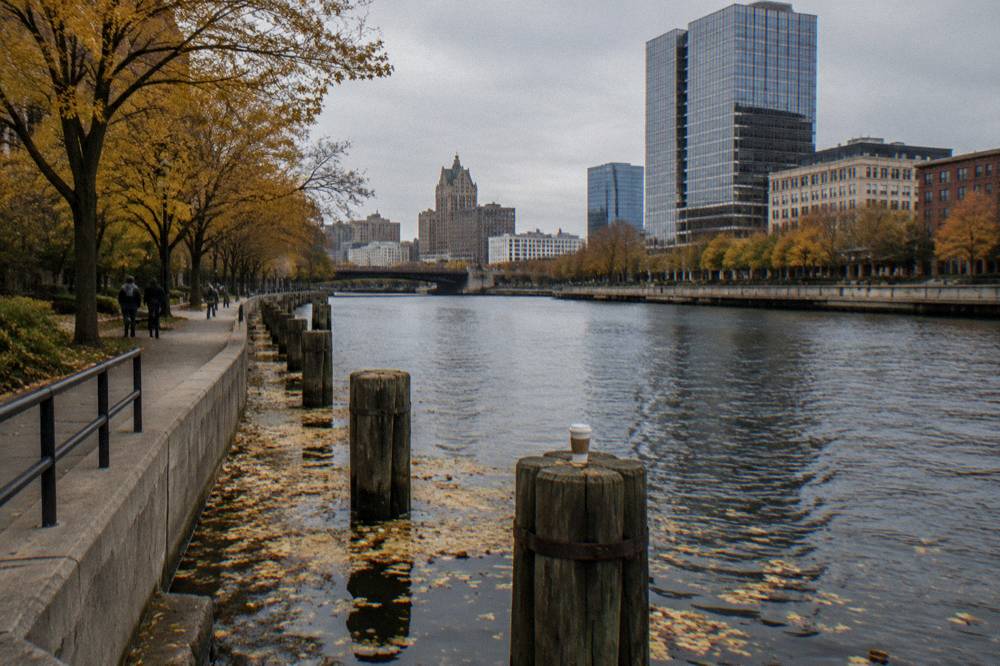
Winter has its own quiet argument. With the boats out of the water and the patios closed, the Riverwalk becomes a plain, uncrowded walking corridor through the middle of the city, and the river surface often shows the clearest reflections of the skyline you will see all year.
Can You Turn A Riverwalk Walk Into A Day On The Water?
Yes, easily, because every paddling and cruise dock on this page sits within a few minutes' walk of the Riverwalk itself. The realistic same-day pairings are a downtown walk plus the 90-minute skyline kayak tour, a Third Ward walk plus a four-hour rental window, or a full loop capped with the 1 hour 45 minute private donut boat cruise alongside the Riverwalk for a group of up to 10.
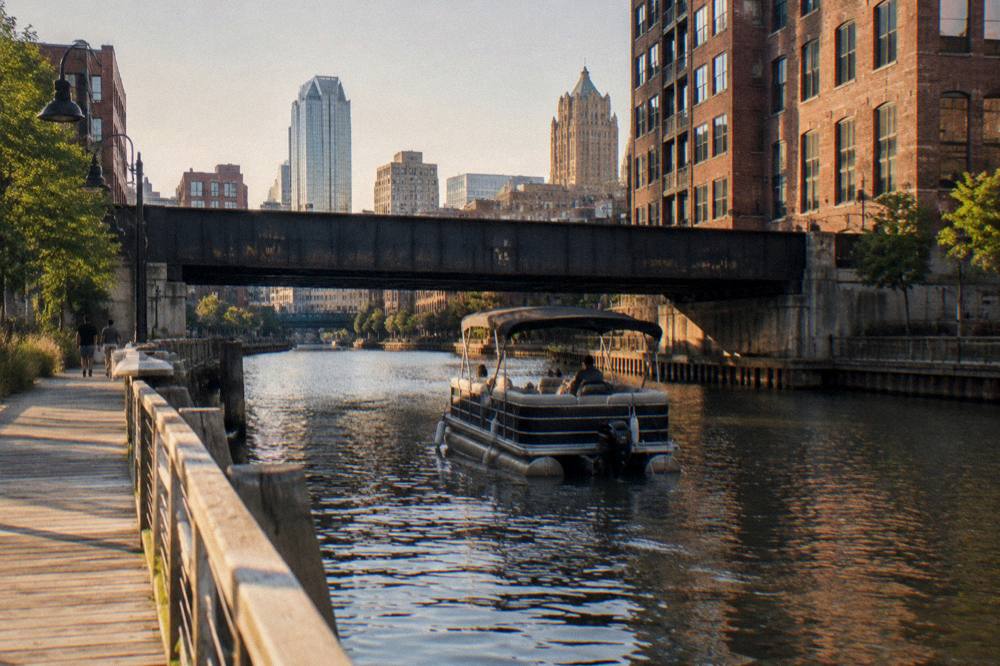
The arithmetic favors it. The skyline kayak tour takes an hour and a half, the downtown stretch between Pere Marquette Park and the Public Market is a short walk at each end, and the two together fill a relaxed half day without any driving between components. Families with young children or non-paddlers can substitute the Discovery World dock paddling session, a one-hour, from $18 per person introduction to the water on the lakefront harbor, and keep the rest of the day on foot; it rates 5.0 from 5 reviews, a small pool, but an unblemished one. Its booking page currently shows the next available date in late June of the following year, since the dock sessions are a summer product.
Groups have the third option. The private donut boat is rented by the group, carries up to 10 passengers, and cruises alongside the Riverwalk for 1 hour 45 minutes with a cooler, ice and a speaker included, which makes it the natural bookend for a birthday or reunion day that starts as a walk.
| Product | Time on water | From | Group size | Best paired with |
|---|---|---|---|---|
| Skyline kayak tour | 1 hour 30 minutes | $83 per person | Max 12, guided | Downtown bridge walk |
| River kayak rental | 4 hours | $55 per rental | Up to 20 travellers | Full Riverwalk loop |
| Tandem kayak rental | 4 hours | $89.75 per tandem | Up to 20 travellers | Third Ward plus downtown |
| Discovery World dock paddling | 1 hour | $18 per person | Session-based | Lakefront and Art Museum walk |
| Private donut boat cruise | 1 hour 45 minutes | Price at booking | 10 passengers | Group day on the Riverwalk |
All five of the paddling and small-boat products on this site list free cancellation up to 24 hours before the start, and weather cancellations come with a new date or a full refund. The booking pages show no open dates in October; they reload dates for the next season, so check the booking page for dates when the season reopens.
The one mistake worth avoiding is sequencing. Book the paddle before the walk, not after, because a walking day drifts: patios, the Public Market, a bridge lift, and suddenly the four-hour rental window you were counting on is half gone. Walk first only if your water time is already locked in.
If the question is which water product fits your group at all, rather than how to bolt one onto a walk, the which Milwaukee boat tour is right for you guide works through the decision in one place, and the homepage trip picker does the same in three questions.
Common Questions About The Milwaukee Riverwalk
How long is the Milwaukee Riverwalk?
The Milwaukee Riverwalk System runs 3.1 miles along both banks of the Milwaukee River, from the site of the former North Avenue Dam through downtown and the Historic Third Ward to Lake Michigan. Walking the full route at an easy pace takes most people 90 minutes to two hours.
Is the Milwaukee Riverwalk open at night?
Yes. The Riverwalk is a public walkway open 24 hours a day, 365 days a year, per the City of Milwaukee's Department of City Development. Individual businesses, patios and docks along it keep their own hours.
Where does the Milwaukee Riverwalk start and end?
The system starts near the site of the former North Avenue Dam in the north and ends where the river meets Lake Michigan at the edge of the Historic Third Ward. Most visitors enter mid-route at Pere Marquette Park or near the Milwaukee Public Market.
Can you kayak on the Milwaukee River from the Riverwalk?
Yes. Brew City Kayak operates from 820 S Water Street in the Harbor District, offering a guided skyline kayak tour (from $83 per person, max 12), a four-hour river kayak rental (from $55 per rental) and a tandem rental (from $89.75 per tandem kayak), all in the open-water season.
What is there to see on the Milwaukee Riverwalk?
Public art including the bronze Fonz statue, the bascule bridges of downtown, the Marcus Center, the converted warehouses of the Historic Third Ward, the Milwaukee Public Market, and, at the lakefront end, Discovery World and the Milwaukee Art Museum's Calatrava pavilion.
When is the best time of year for the Milwaukee Riverwalk?
The path itself is walkable year round. For the water-level experience, plan around the open-water season of roughly May to October, when kayak tours, rentals, the donut boat and the cruise operators are all running; booking pages currently show no open October dates and reload for the next season.
The Riverwalk is the spine that everything else in this city's water story hangs from, and Milwaukee River Boat Tours covers the boats that run along it: the paddling tours, the rentals and the private donut boat, plus honest reporting on the cruise operators that share the same water. Walk the path first, then get on the river.